🕒 3 min read
What is Speeding?
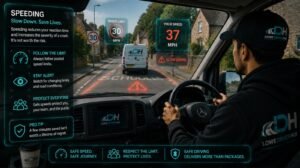
Speeding is a safety event generated when Samsara AI detects that a vehicle has exceeded the posted speed limit.
Speed limits are in place to protect all road users and are the maximum legal speed under ideal conditions. In many situations, it is safer to drive below the speed limit due to traffic, weather or road conditions.
Drivers are expected to remain within the legal speed limit at all times.
⸻
How is it Measured?
Samsara AI uses GPS, vehicle telematics and mapped speed limit data to monitor your speed throughout every journey.
A Speeding event may be generated when your vehicle exceeds the posted speed limit for longer than the configured threshold.
To avoid Speeding events, you should:
Always observe and follow posted speed limits.
Adjust your speed for weather, traffic and road conditions.
Slow down well before entering lower speed limit zones.
Stay alert for temporary speed restrictions.
Continuously monitor your vehicle’s speed.
⸻
Target
To achieve Fantastic performance, you should aim for:
0 Speeding Events
Every journey should be completed within the legal speed limit and at a speed appropriate for the conditions.
⸻
How the AI Detects It
Samsara AI combines GPS location, vehicle speed data and digital road mapping to monitor compliance with speed limits.
The system may identify:
Your vehicle’s current speed.
The applicable speed limit for the road.
How far above the speed limit the vehicle is travelling.
The duration of the speeding.
The location and time of the event.
Qualifying events are automatically recorded when the configured thresholds are exceeded.
⸻
What Causes It?
Speeding events are commonly caused by:
Failing to notice a change in the speed limit.
Accelerating too early before a higher speed limit begins.
Not slowing down quickly enough when entering a lower speed limit.
Driving too fast to make up time.
Becoming distracted and allowing your speed to increase.
Misjudging your vehicle’s speed on long or open roads.
Even small increases in speed can significantly increase stopping distance and collision severity.
⸻
Best Practice
To consistently avoid Speeding events:
Regularly check your speedometer.
Scan ahead for speed limit signs.
Slow down before entering villages, residential areas and roadworks.
Allow extra time for your journey so you never feel pressured to speed.
Use cruise control where appropriate and safe to do so.
Remember that the speed limit is a maximum, not a target.
⸻
Real-World Examples
Examples of Speeding include:
Continuing at 40 mph after entering a 30 mph zone.
Accelerating before reaching a national speed limit sign.
Failing to reduce speed for temporary roadworks.
Exceeding the speed limit whilst overtaking.
Allowing your speed to increase on a downhill section of road.
Missing a newly introduced lower speed limit sign.
These situations increase the risk of collisions and reduce the time available to react to hazards.
⸻
Can This Event Be Reviewed?
Some speeding events may be reviewed if you believe they have been recorded incorrectly.
Examples may include:
Incorrect speed limit mapping for the road.
Temporary speed limits that were not reflected in the mapping.
GPS inaccuracies affecting the recorded speed.
The recorded data appears inconsistent with the journey.
If you believe a Speeding event has been recorded incorrectly, report it to your manager as soon as possible.
Not every event can be overturned, but genuine mapping or system errors may be investigated.
⸻
Why It Matters
Driving within the speed limit is one of the most important aspects of road safety.
Following safe driving standards helps:
Protect you and other road users.
Reduce stopping distances.
Reduce the severity of collisions.
Improve hazard awareness and reaction time.
Protect your Safety Score.
Demonstrate professional driving behaviour.
Every journey completed within the speed limit contributes to safer roads, improved driving performance and greater confidence from customers and your employer.